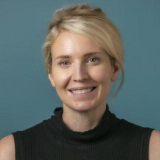
PHILADELPHIA, PA (November 19, 2026) – The Science Center today announced the two recipients of the Genentech Scholars Program: Ravi Gupta, MD, of Johns Hopkins Medicine and Eugene Lin, MD of the University of Southern California.
Created by the Science Center and Genentech, a member of the Roche Group, the competitive program awards each scholar up to $25,000 over 12 months. It was built for researchers whose work is nearing publication and can shape how care is diagnosed, delivered, financed, and understood. The Scholars Program is funded as part of a grant Genentech awarded the Science Center in February 2026 to identify challenges and solutions in closing the gap between breakthrough innovation and patient impact.
"Greater Philadelphia doesn't have a discovery problem. It has a commercialization opportunity," said Kerry Benson, Interim President & CEO of the Science Center. "The science, the clinical power, and the talent are here. What's missing too often is the evidence and alignment that move a breakthrough from a promising result to a patient's bedside. Our inaugural Genentech Scholars are producing exactly that kind of evidence, and we're proud to help get it in front of the people who make adoption decisions."
The Genentech Scholars

Ravi Gupta, MD (Johns Hopkins University School of Medicine) — Disease State Track Newly FDA-cleared blood tests for Alzheimer's disease could make diagnosis faster, cheaper, and more accessible than PET scans or spinal taps. But little is known about how they're being used in practice. Using real-world clinical data, Dr. Gupta will examine which patients are getting tested, whether access is equitable, and whether the tests streamline diagnosis or add to it. The findings are intended to guide appropriate clinical use and inform policy on dementia care costs.
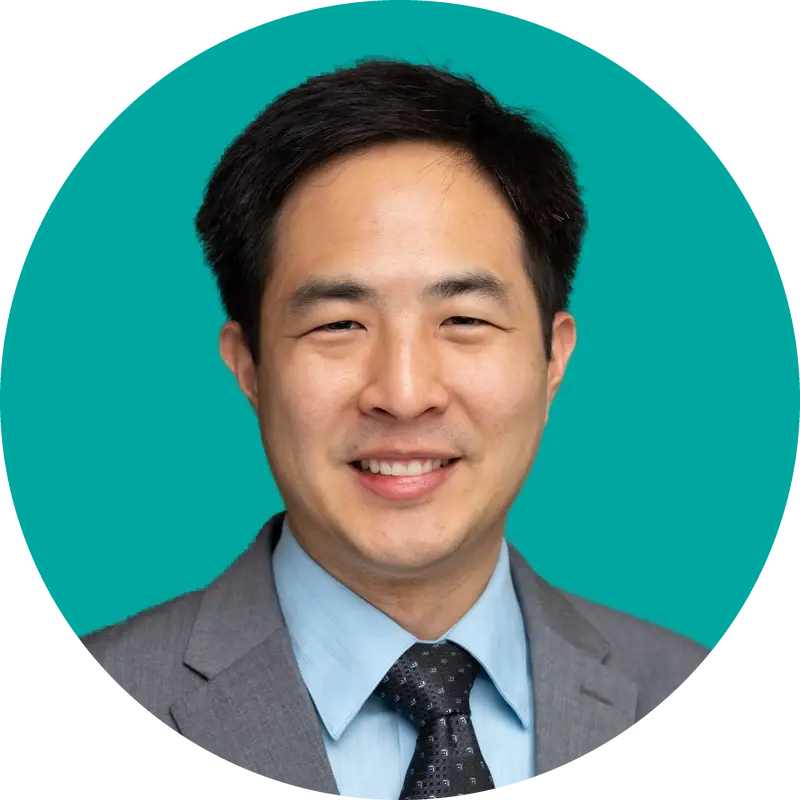
Eugene Lin, MD (Keck School of Medicine of the University of Southern California) — Community & Public Health Track. Access to dialysis can depend on more than a doctor's referral. Dr. Lin will examine whether patients with public insurance or unreliable transportation face barriers to getting dialysis at facilities nationwide. The findings are intended to inform policy on dialysis reimbursement and transportation support for people with kidney failure.
Over the next 12 months, the Scholars will complete their research and submit it to peer-reviewed journals. They will present findings at leading conferences in geriatrics, Alzheimer's disease, health informatics, and substance use.
The Scholars will also share their findings with the Science Center's Healthcare Innovation Translation Council, and the Science Center will release a public summary when the work is complete, expected in fall 2027.
Healthcare Innovation Translation Council
The Scholars Program works alongside the Science Center's Healthcare Innovation Translation Council, also supported by the Genentech grant. Together they address two sides of the same problem. The Scholars produce evidence about why innovations do or don't get adopted. The Council puts that kind of evidence in front of the people who make adoption decisions.
To date, the Council has met three times. Members identify priority barriers in the translation of healthcare innovation to adoption and aim to develop novel ways of smoothing out these points of friction. Its roughly dozen members include health system strategy and innovation executives from Jefferson, Penn Medicine, and Children's Hospital of Philadelphia; payer leaders from Independence Blue Cross and Highmark; pharma partnership leadership from Eli Lilly's Gateway Labs; the Medical Device Innovation Consortium; Drexel University College of Medicine; and growth-equity and diagnostics investors.
About the Science Center
The Science Center is Philadelphia's premier catalyst of entrepreneurial activity, healthcare innovation, and economic growth. Established in 1963, the nonprofit has been recognized by The Brookings Institution as a best-in-class investor, mentor, and economic development partner for young technology companies. Working alongside industry partners and leading research and academic institutions across the globe, the Science Center has supported hundreds of early-stage companies that have a combined $7.6B annual economic impact on Greater Philadelphia. Today, the organization advances healthcare innovation from idea to the marketplace through startup support services and building STEM pathways for Philadelphia youth. Learn more at sciencecenter.org.